Director
Ivan Vyrypaev
Iranian Conference
Original title: Иранская конференция
First Slovenian production
Opening night
19 September 2026
Main Stage
Duration:
180 minutes, incl. interval
Creators
Cast
Philip Rasmussen, Professor and Chair of International Relations at the University of Copenhagen, Division of the Humanities
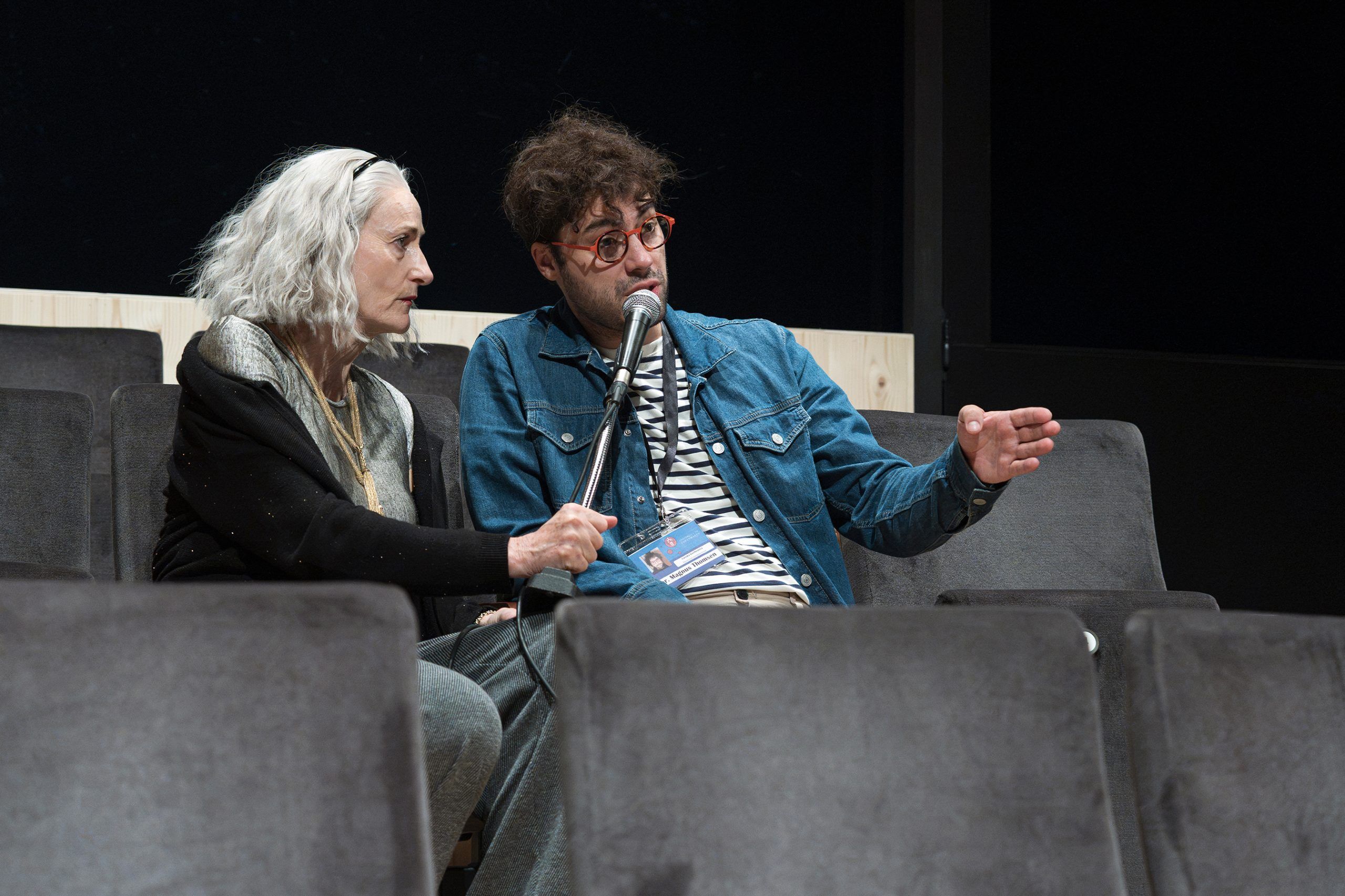
Magnus Thomsen, political analyst, staff writer at Politiken, a daily newspaper; activist of European Islam, an international movement.
Oliver Larsen, Professor of Theology at the University of Copenhagen
Tamara Avguštin
Astrid Petersen, freelance journalist who covers global hot spots
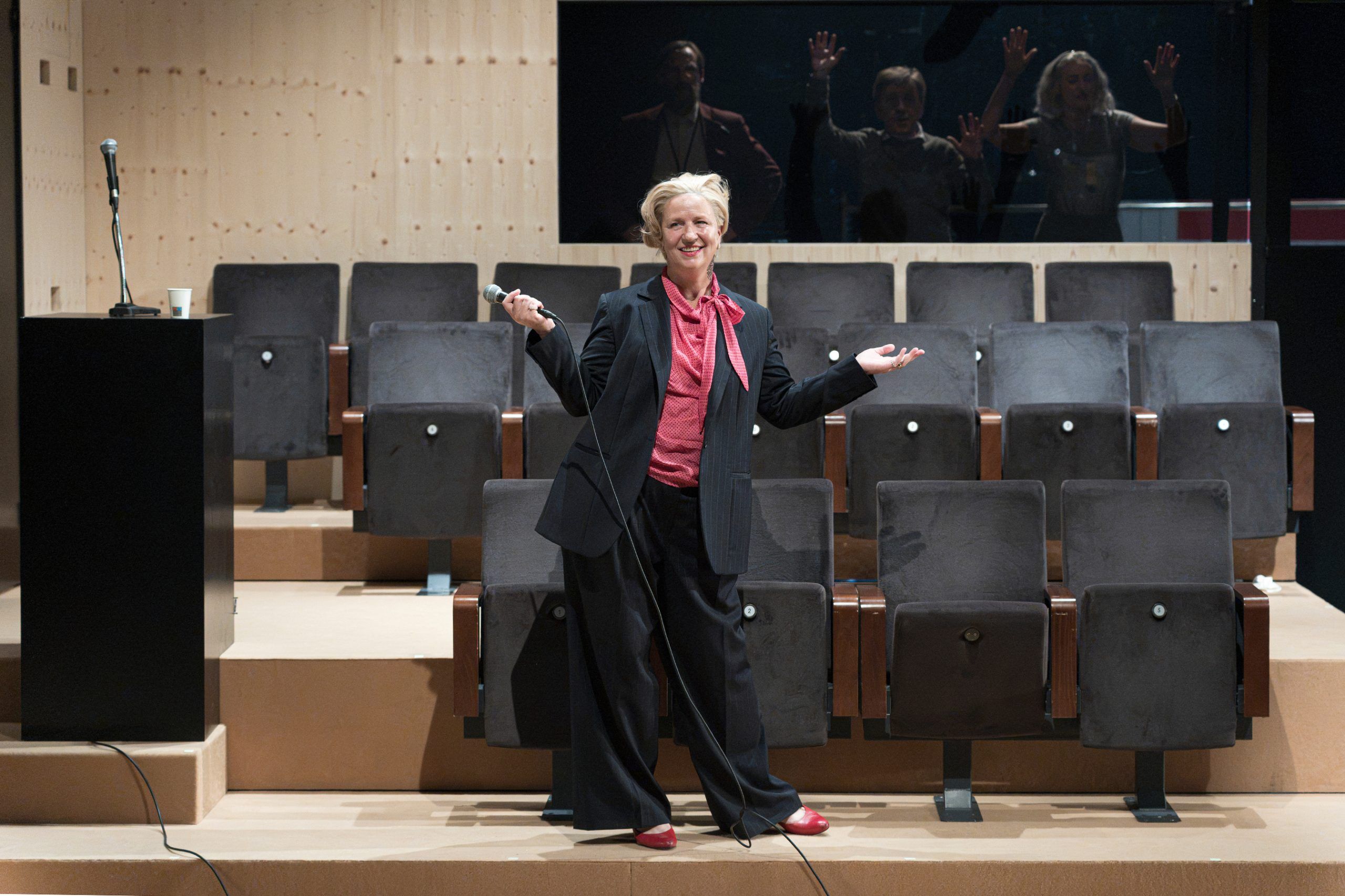
Emma Schmidt Poulsen, wife of the Prime Minister of Denmark; president of InterAction, an international charity, in the past, a well-known TV host
Gustav Jensen, Danish author and philosopher
Father Augustine, priest of the Evangelical Lutheran Church in Denmark, Professor of Theology at the University of Copenhagen
Pascual Andersen, principal Conductor Emeritus at the Danish National Symphony Orchestra
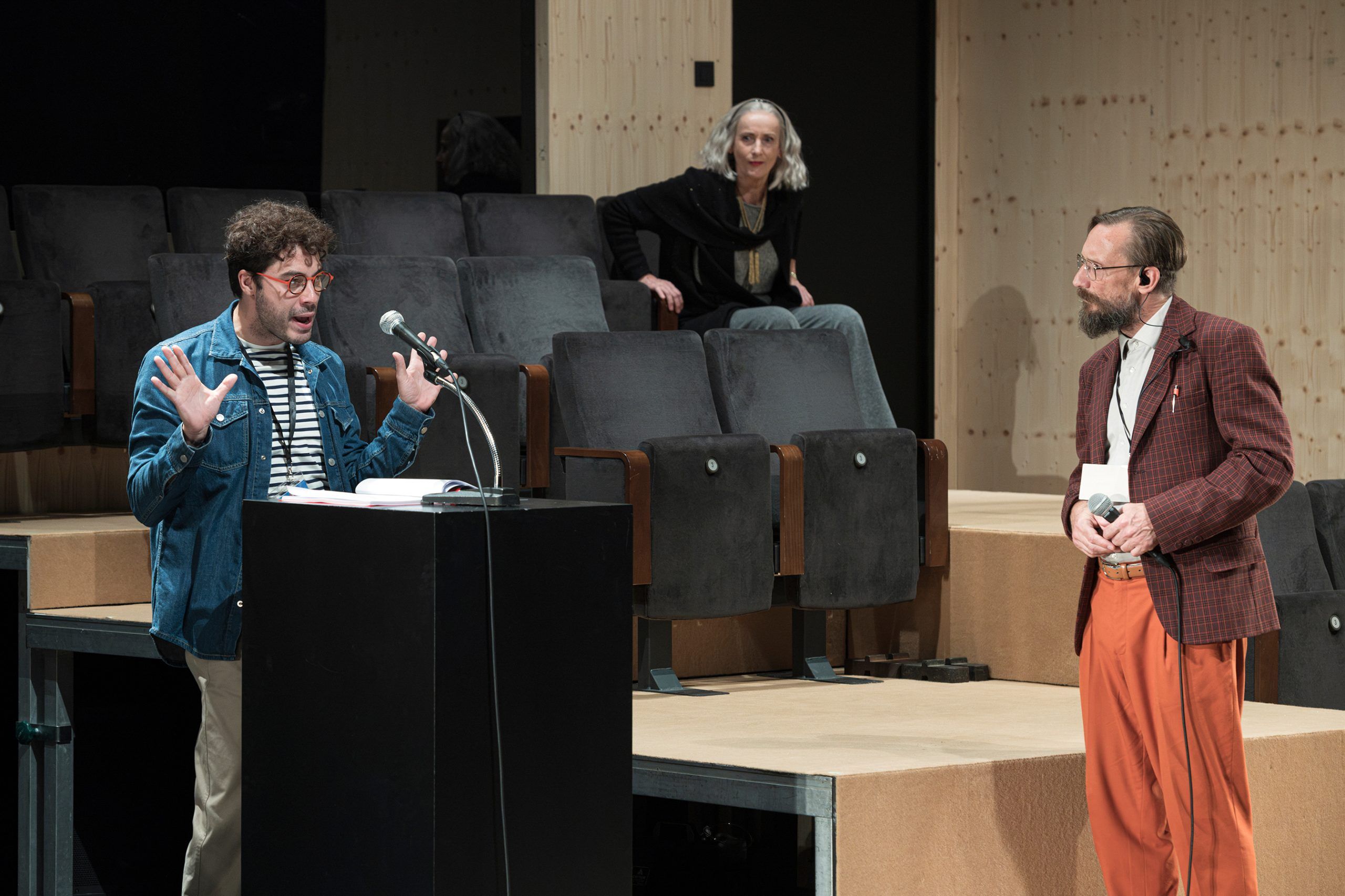
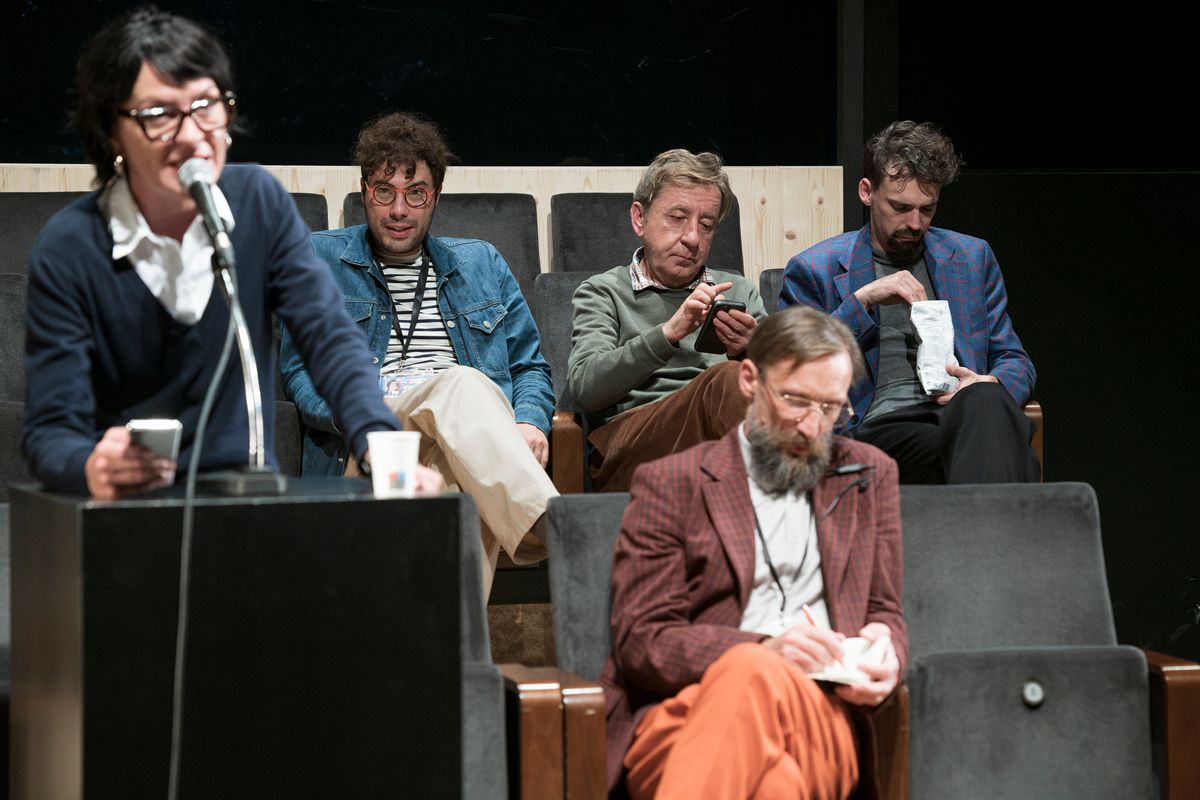
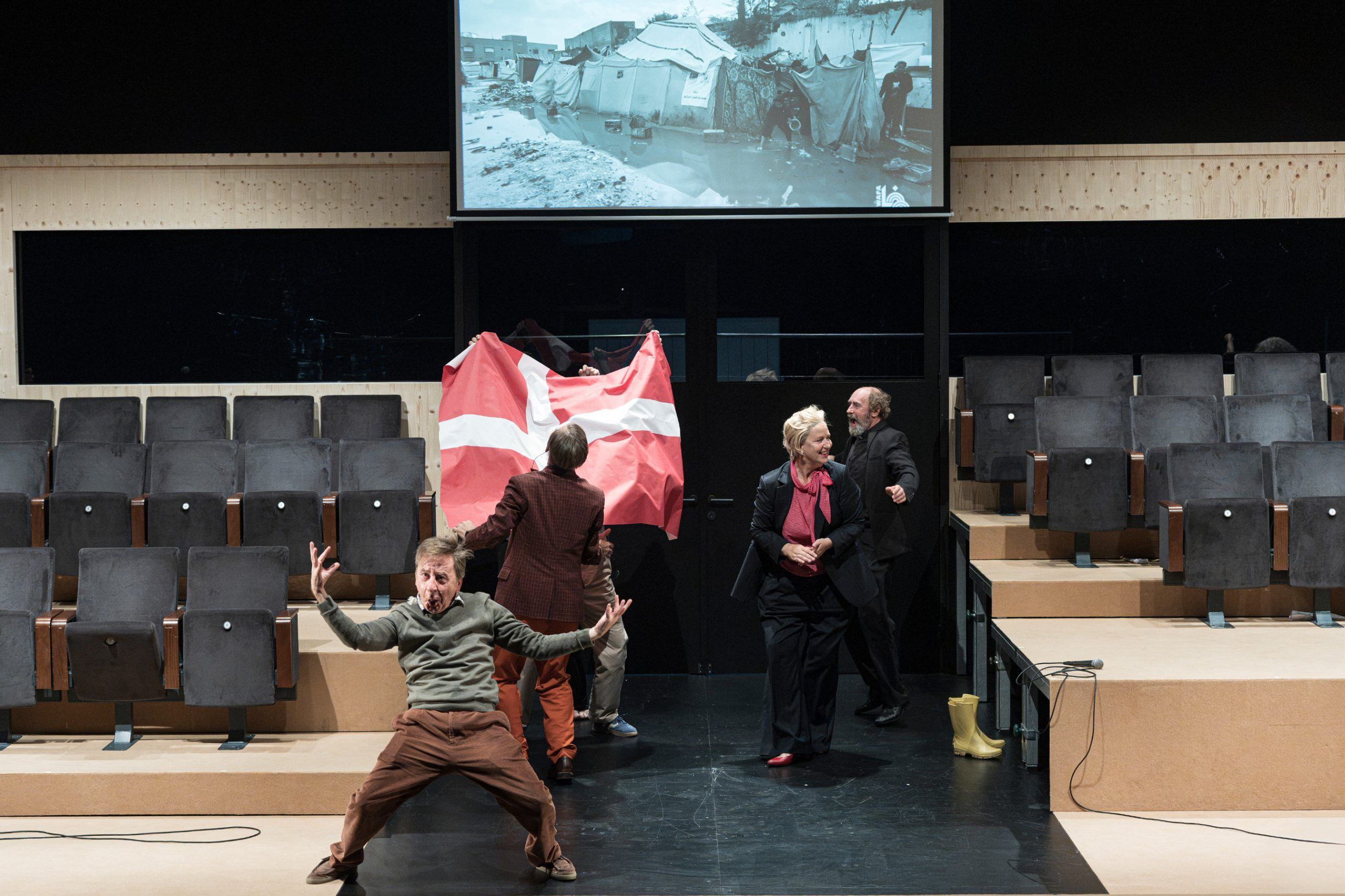
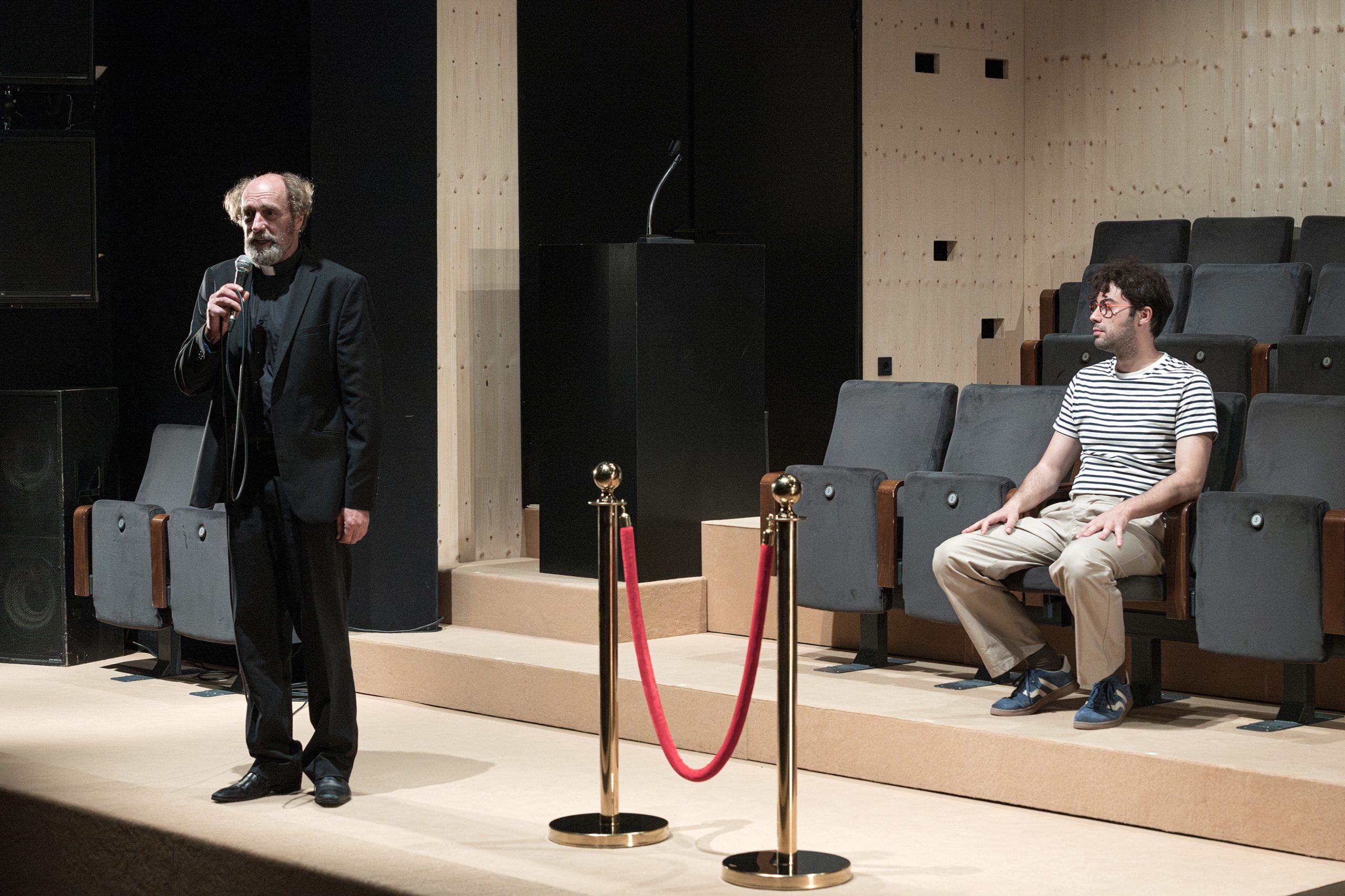
The staging of a text that resists the conventions of a narrative dramatic structure seeks drama in the fractures between the panellists themselves. Despite their divergent views on the world and its economic, political, environmental, religious, and philosophical realities, they remain preoccupied with, or attempt to make sense of, the polarity between East and West. Yet it soon becomes evident that the positions dictated by their professional identities, in terms of professional vocabulary and the opinions they are permitted to express, do not fully correspond to their personal convictions.
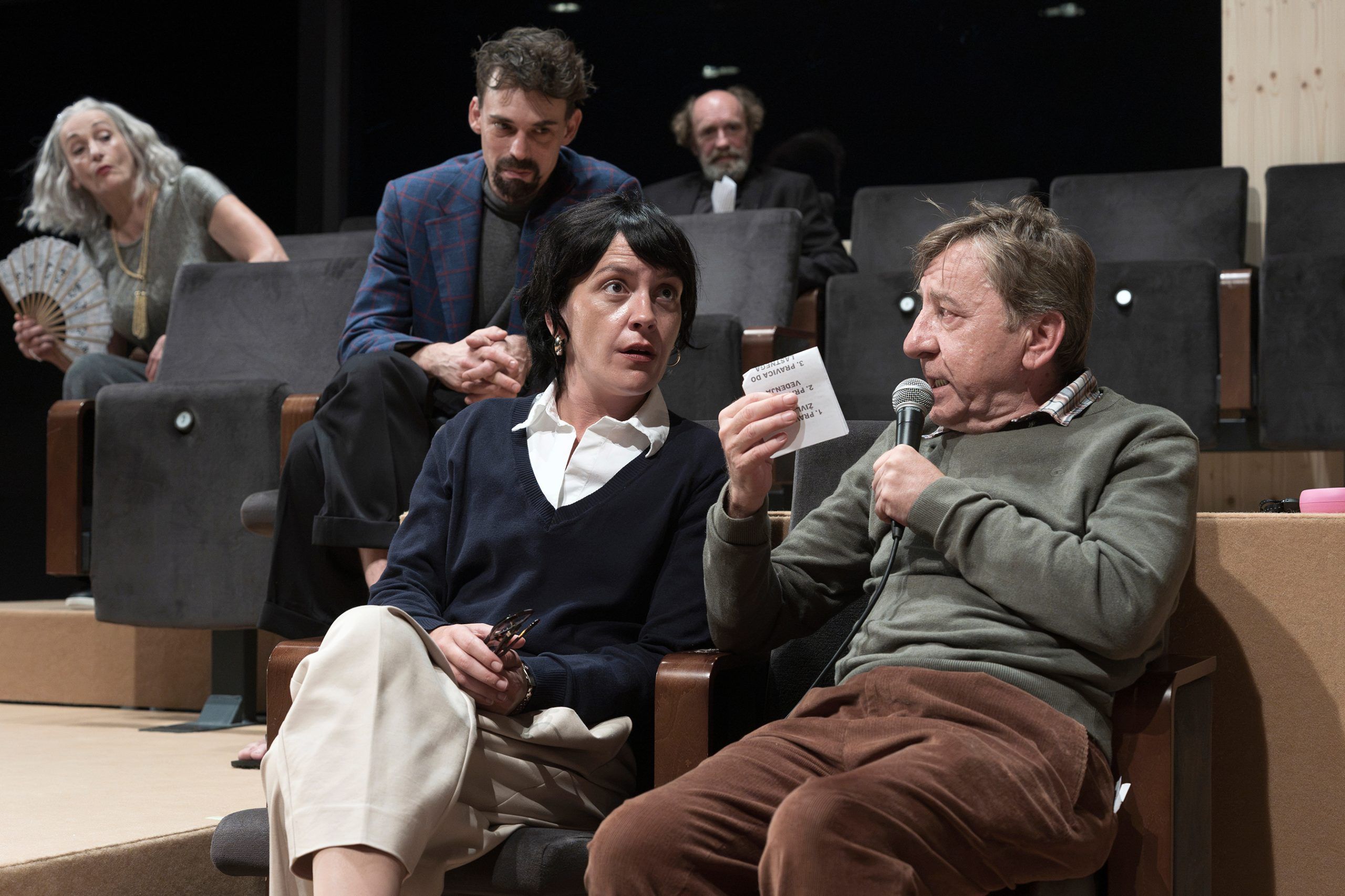
We thus become witnesses to a carefully maintained charade, observing individuals who gradually undermine and violate the very code of the conference itself. They slip into personal fears and, at times, make controversial, politically incorrect statements which, whilst we as viewers may understand them, we are also ashamed of.
At this moment in time when we are witnessing human lives and human rights being disregarded across much of the world, while force and power prevail; when the complacency of the Western world is sustained either by a retreat into religious traditionalism or by the cynicism of humanist rationalism; when inherited cultural baggage serves as a justification for xenophobia, racism, nationalism, and a deeply troubling sense of white superiority. It is precisely then that Vyrypaev, with remarkable restraint, begins to unravel the sense of guilt.
This driving force behind yet another benign conference, one which, ultimately, will have no direct impact whatsoever on the regimes of disadvantaged regions, may well lie in guilt and the clearing of one’s conscience.
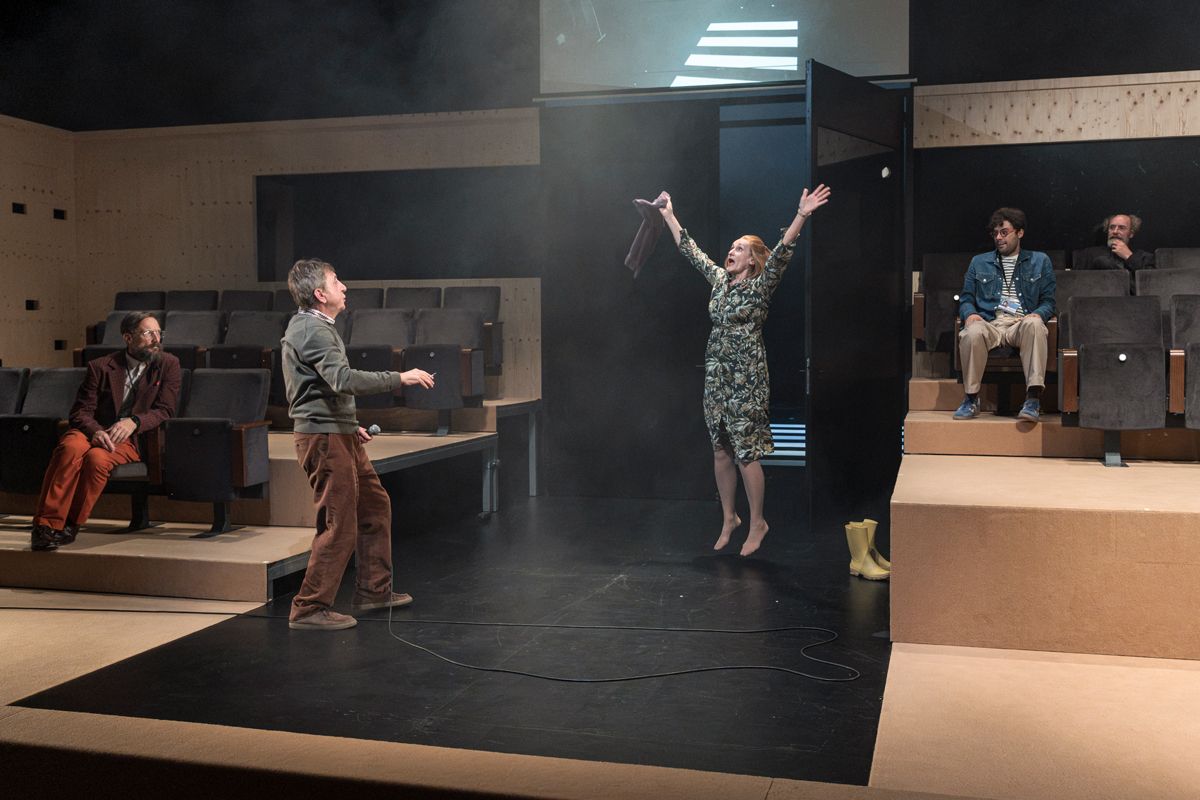
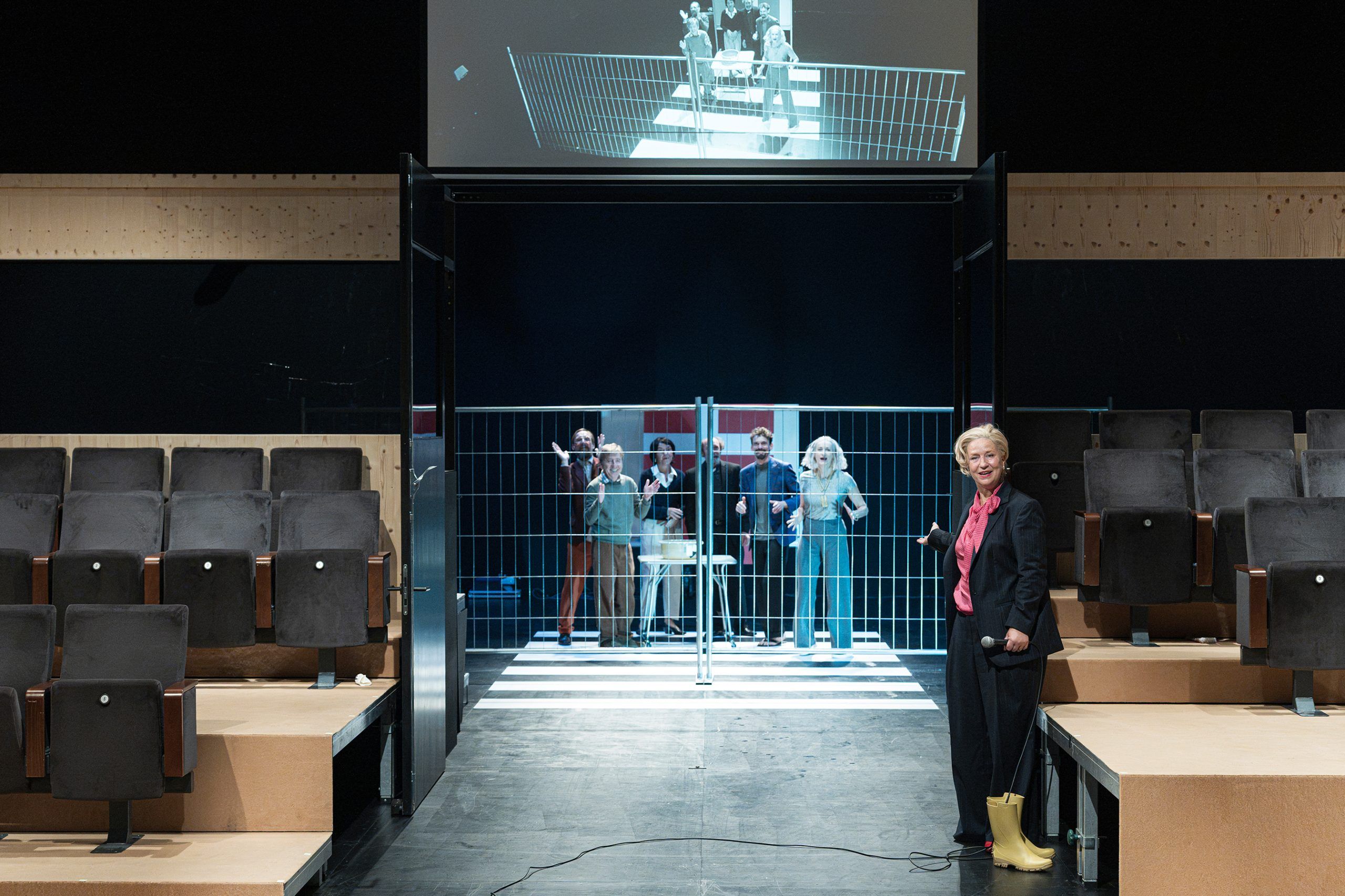
What Vyrypaev does not convey through the words he so vividly shares with the panellists, he unfolds through the performance space of the event, where we are propelled into the very essence of the contemporary era. Perhaps this is a moment of reflection, though it is certainly not cathartic, but rather grotesque.
The production is built upon the premise of a theatrical event that exposes and articulates the hypocrisy of privileged, educated individuals and their frustration. For on this evening, they too become aware of these positions, while seeking the cause-and-effect relationship behind this attitude.
Due to the abundance of allusions, Vyrypaev’s text becomes a theatrical palimpsest that oscillates between the fictional and the real politics.
Nina Rajić Kranjac